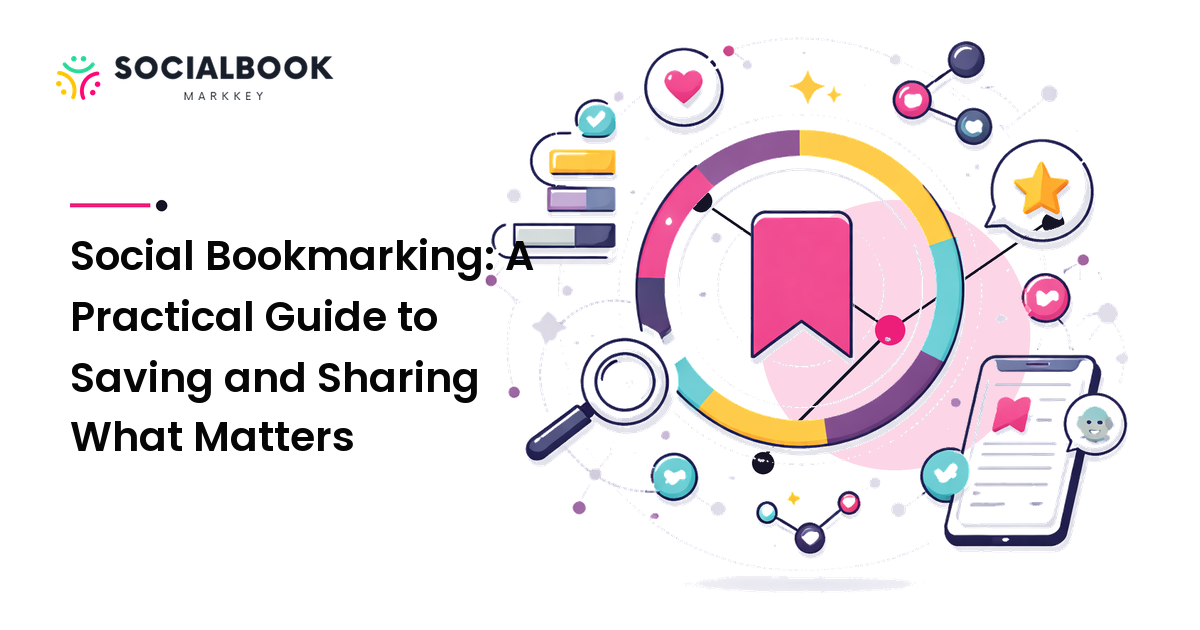
Social bookmarking is one of the oldest ways people share links online, and it still works when you do it with care. At its simplest, it means saving a web page to a public service so you and others can find it again, tag it, and pass it along. Done thoughtfully, it puts your best pages in front of curious readers and gives search engines another path to discover your work. Done carelessly, it becomes noise that nobody clicks and that some platforms quietly bury. This guide walks through what social bookmarking is, why it can help, and how to approach it so the effort actually pays off.
What Social Bookmarking Actually Is
A social bookmark is a saved link, usually with a title, a short description, and a few tags, stored on a service where other people can see it. Think of it as a public version of the bookmarks folder in your browser. Instead of the link living only on your machine, it sits on a site where readers browse by topic, vote on what they find useful, and follow people who consistently surface good material.
The "social" part is what separates it from a private bookmark. Other users can discover your saved page, react to it, and re-share it. That shared layer is where the visibility comes from. When a page you saved resonates with a community, more people see it, and a few of them may link to it, mention it, or subscribe to your site.
It helps to separate two related ideas. Pure social bookmarking sites focus on collecting and tagging links. Community-driven discovery platforms add voting, commenting, and ranking on top of that. Both reward genuinely useful content, and both punish obvious self-promotion. Knowing which kind of platform you are on changes how you should behave there.
Why It Still Helps Your Visibility
People sometimes assume bookmarking is outdated. It is not glamorous, but it earns its place for three concrete reasons.
Discovery by real readers
The main payoff is human. A well-written submission on an active platform reaches people who are specifically browsing for that topic. Those readers tend to be more engaged than a random visitor, because they sought out the subject. A handful of the right readers is worth more than a flood of the wrong ones.
A path for indexing
Search engines crawl popular, frequently updated platforms often. When your link appears there, it gives crawlers another route to find your page, which can help newer content get noticed sooner. This is a supporting signal, not a ranking trick, so treat it as a small helpful nudge rather than a shortcut.
Compounding reach
When something you bookmark gets traction, other users re-share it, and that exposure can lead to mentions and natural links elsewhere. You cannot force this, but you can make it more likely by submitting things genuinely worth passing on.
How to Choose Where to Submit
Not every platform deserves your time. Pick based on fit and health rather than raw size.
- Relevance. A platform with an audience that cares about your niche beats a giant general site where your link drowns. Relevance drives clicks.
- Activity. Look for recent submissions, comments, and votes. A quiet platform will not move anything for you, no matter how big it once was.
- Moderation quality. Healthy communities remove spam. That is a good sign, because it means the links that survive are seen as trustworthy. Avoid anything overrun with junk.
- Rules clarity. Read the submission guidelines. Platforms that spell out what they allow are easier to work with and less likely to penalize you by surprise.
A short list of two or three platforms where your audience actually gathers will outperform a long list you cannot keep up with.
Writing a Submission People Want to Click
The submission itself decides whether anyone engages. Treat the title and description as their own small piece of writing.
Start with an honest, specific title. It should describe the value of the page in plain words, not bait. If the page is a step-by-step setup walkthrough, say so. Curiosity gaps and exaggerated promises get clicks once and erode trust fast.
Write a description that adds context rather than repeating the title. One or two sentences explaining who the page helps and what they will take away is plenty. Then choose tags that match how people would actually search for the topic. A few accurate tags beat a long pile of loosely related ones.
Finally, submit pages that stand on their own. The fastest way to fail at bookmarking is to promote thin content. If the destination is genuinely useful, the rest of the work gets much easier.
Doing It the White-Hat Way
The line between promotion and spam is real, and platforms watch it closely. Staying on the right side is mostly common sense.
Submit a mix, not just your own links. Communities trust people who share useful things broadly, not accounts that only push one domain. A reasonable habit is to save and share other people's good content too, because it is honest and it builds standing.
Pace yourself. Blasting dozens of links in a day looks automated and often triggers filters. A steady, modest rhythm reads as a real person and lasts longer. Engage where it fits, by commenting and voting on things you actually find useful, rather than dropping links and disappearing.
Avoid the tactics that promise volume: automated mass submissions, paid bookmarking packages, and link farms built only to inflate counts. They tend to produce links nobody sees, on platforms search engines distrust, and they can put your reputation at risk. Slower and genuine wins here because it is durable.
A Simple Routine That Works
You do not need a complicated system. Pick your two or three relevant platforms, create complete profiles, and submit your best new content as you publish it. Spend a few minutes engaging with others while you are there. Once in a while, look at which submissions earned clicks or comments, and do more of what worked. That feedback loop, repeated patiently, is the whole method.
Pair this with the rest of your promotion. Bookmarking complements sharing in communities, basic on-page SEO, and earning real links, and it works best as one part of that wider effort rather than a standalone fix.
Frequently Asked Questions
Is social bookmarking still worth doing?
Yes, when it is done with care. It will not transform a site overnight, but it brings engaged readers and gives your content another route to be discovered. Treat it as a steady supporting tactic, not a magic switch.
How many platforms should I use?
Fewer than you think. Two or three platforms where your audience genuinely gathers, used consistently, beat a long list you cannot maintain. Depth of engagement matters more than breadth.
Will bookmarking my pages improve my search rankings?
It can help indirectly by helping pages get discovered and, occasionally, by leading to natural mentions. It is a supporting signal, not a direct ranking lever, so do not expect it to substitute for good content and on-page fundamentals.
What is the difference between bookmarking and spamming?
Intent and behavior. Sharing genuinely useful links at a human pace, with honest titles and a mix of sources, is bookmarking. Mass-submitting your own links with bait titles is spam, and platforms are built to catch it.
How do I know if a platform is worth my time?
Check that it is active, moderated, and relevant to your topic. Recent submissions and visible moderation are good signs. If it is overrun with junk, your link will be too, and the effort will not pay off.
Start Sharing What Deserves to Be Seen
Social bookmarking rewards patience and honesty more than volume. Choose a couple of relevant platforms, write submissions that respect the reader, share broadly, and let your best content do the work. If you want a simpler way to manage and promote the links that matter, boost your online visibility with SocialBookmarkKey.